Pubblicato il 09 25, 2026
Finding an electric forklift manufacturer in China is not difficult.
Finding one you still want to work with after the first container is much harder.
A buyer searching online can quickly collect quotations from dozens of suppliers. Most will offer similar capacities. Product photos often look good. Specifications may include lithium batteries, AC drive systems, different mast heights and a long list of optional features.
Prices can also be surprisingly close.
The real differences usually appear later.
A forklift arrives with a different battery from the quotation. A dealer needs a replacement sensor and nobody can identify the part. A technical question takes a week to answer. The second order is not quite the same as the first.
For end users purchasing a single unit, such issues are troublesome. But for distributors staking their reputation on the equipment, the stakes are far higher.
So how can you assess if a Chinese electric forklift supplier fits long-term collaboration?
Below are key points to review before ordering.
One of the first questions many buyers ask is:
“Are you a factory?”
It is a reasonable question, but the answer alone does not tell you enough.
Some manufacturers sell directly overseas. Others work through export companies. Some trading companies also provide good technical and after-sales service.
What matters is understanding who is responsible for the product.
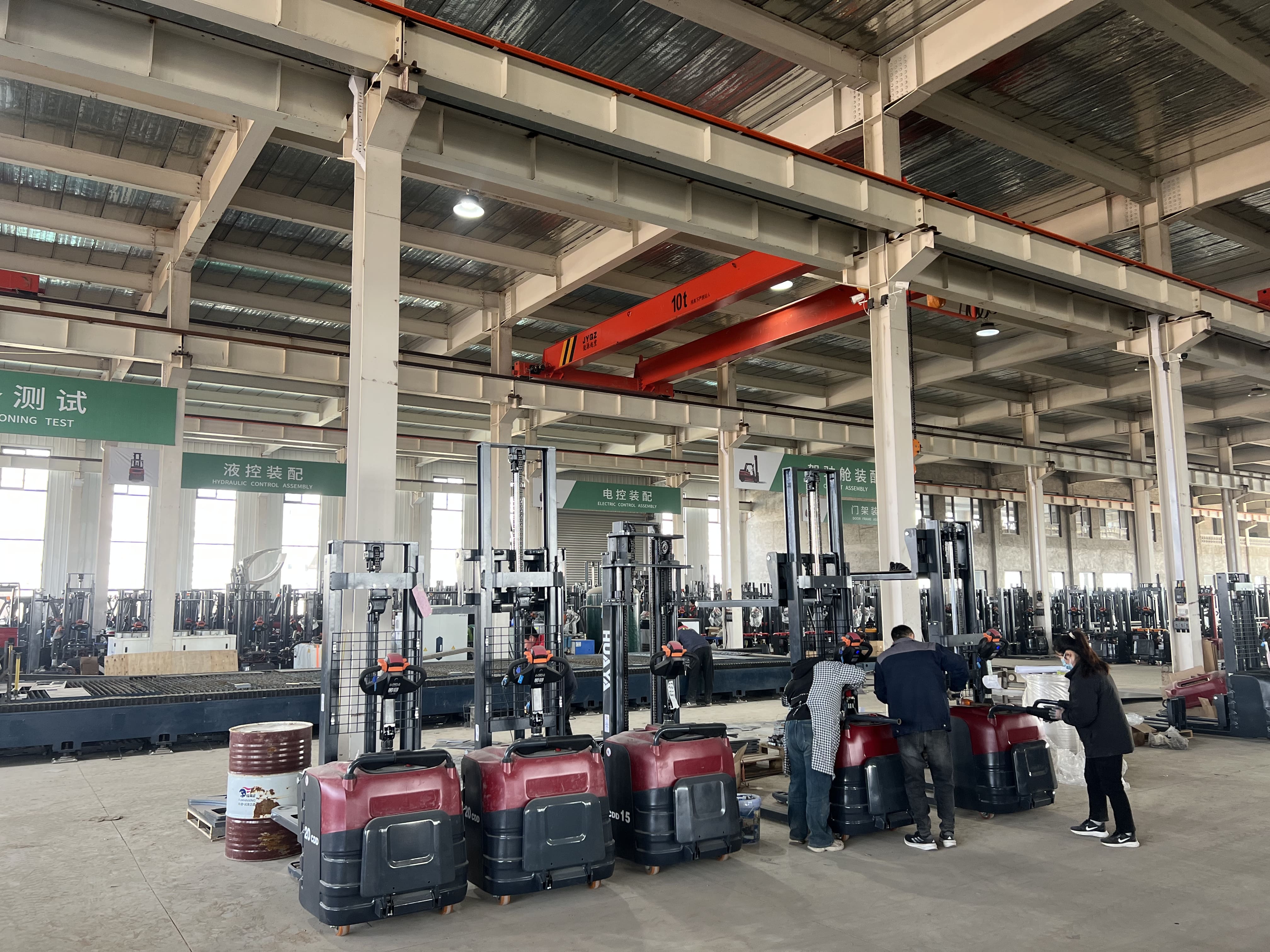
Ask where the forklifts are assembled, who controls production, where testing is carried out and who will handle technical problems after shipment.
If possible, request recent factory photos or videos.
For a larger order, arrange a video call, factory visit or independent inspection.
You should be able to understand the basic production process before sending a significant deposit.
A polished website can make a small supplier look large.
A simple website can make a capable factory look smaller than it really is.
Neither tells you much about the forklift.
Look for evidence behind the marketing.
Ask for videos showing:
l Assembly
l Mast installation
l Electrical wiring
l Battery installation
l Testing
l Finished forklifts
l Warehouse stock
l Container loading
If you are discussing a particular 3 ton model, ask to see that model rather than a general promotional video of the factory.
A reliable supplier should be comfortable showing you what it is actually producing.
Suppose three suppliers quote a 2.5 ton electric forklift.
Supplier A is the cheapest.
Is Supplier A really offering the same machine?
Maybe not.
Check the battery voltage and capacity. Compare mast type and lift height. Look at the charger, tires, forks, controller, overall dimensions and included options.
One supplier may include side shift while another quotes it separately.
Another may use a smaller battery to reach a lower price.
The model name on the quotation is only the beginning.
Before comparing suppliers, build a simple specification sheet and ask every factory to quote against the same requirements.
That gives you a much cleaner comparison.
A forklift is a working machine, not a showroom product.
Paint finish matters, but what is underneath it matters more.
Pay attention to the mast, axle, frame, overhead guard, hydraulic cylinders, steering system and braking components.
Ask how the machine is tested with a load.
If possible, request videos of the forklift:
lifting, lowering, driving, reversing, turning and braking with a realistic load.
Watch the mast while it moves.
Look at the stability of the truck.
Listen for unusual mechanical noise.
For a distributor, these observations can be more useful than another page of marketing claims.
At EIOUU, for example, our electric forklift configurations can include details such as a one-piece cast steel axle, reinforced mast construction, anti-leakage cylinder design and rear axle damping, depending on the model.
These are not glamorous features, but they are the kind of details that affect everyday use.
Electric forklifts depend heavily on their electrical architecture.
Ask what controller is used and how the wiring is protected.
Open the battery compartment in the factory video.
Look at cable routing and connectors.
Check how easy it is to access electrical components during servicing.
Neat wiring alone doesn’t guarantee reliability, yet messy wiring is rarely a good sign.
In dusty, humid or variable conditions, protecting the electrical parts matters even more.
At EIOUU, we pay attention to features such as automotive-grade wiring arrangements and protection of electrical systems on relevant models.
For dealers, the important point is simple: know what is inside the forklift before you sell it to someone else.
Many buyers now request a lithium electric forklift almost automatically.
That is understandable. Lithium batteries offer advantages such as fast charging, opportunity charging and lower routine maintenance compared with traditional flooded lead-acid batteries.
But “lithium battery” is not a specification.
Ask:
l What is the battery voltage?
l What is the battery capacity?
l What battery chemistry is used?
l What BMS is installed?
l What charger is supplied?
l What is the expected charging time?
l What warranty applies to the battery?
l Can a replacement battery be supplied later?
l Is the battery integrated with the forklift's control system?
A manufacturer should be able to answer these questions without turning the conversation into guesswork.
Battery size should also match the application.
A truck working three hours per day does not need the same energy configuration as one working two shifts.
A good supplier should ask about working hours before recommending the battery.
This is one of the easiest ways to evaluate a forklift supplier.
Send an inquiry saying:
“I need a 2 ton electric forklift.”
What happens next?
A weak sales process may simply return a price.
A more useful supplier will usually ask some questions.
What is the maximum load?
How high do you need to lift?
What is the pallet size?
How many hours will the forklift operate each day?
Indoor or outdoor?
Do you need side shift?
Are there narrow aisles?
Lithium or lead-acid?
This matters, since a 2 ton forklift isn’t a universal solution for all 2 ton lifting tasks.
If a manufacturer takes time to learn your operating scenario before recommending a model, the final setup is far more likely to match your needs.
If the forklifts are intended for Europe, compliance and documentation should be discussed before the order is confirmed.
Ask what documentation is available for the exact model and configuration you are considering.
Do not wait until production is complete.
European regulatory requirements should also be checked according to the destination market, product and your role as importer or distributor.
Be particularly careful when a standard forklift is modified with a different mast, attachment, battery system or other major configuration change.
The important point is not whether a salesperson can say “CE.”
The important point is whether the supplier can provide the appropriate documentation for the actual equipment being supplied and answer technical questions about it.
Ask this question before your first order:
“Please send me a recommended spare-parts list for this model.”
The response can tell you a lot.
A manufacturer familiar with its own product should know which parts dealers normally keep in stock and which components may be needed for service.
Depending on the forklift, these can include:
l Sensors
l Switches
l Hydraulic seals
l Wheels
l Brake parts
l Electrical components
l Controller-related parts
l Charger parts
l Mast wear components
You do not necessarily need to buy everything.
The point is to see whether the supplier has a workable parts system.
Also ask whether spare parts can still be identified by model or serial information several years later.
That matters much more to a distributor than receiving a free toolbox with the first forklift.
Every manufacturer likes discussing successful orders.
Ask about failures instead.
For example:
“If the forklift stops working and displays an error code, what should my technician do?”
“If the controller fails during warranty, what is the process?”
“If I need a hydraulic seal after two years, how do you identify the correct part?”
You are not trying to catch the supplier out.
Forklifts are mechanical and electrical machines. Components wear. Faults happen. Operators damage things.
The difference between suppliers becomes clear in how those situations are handled.
For a European dealer, fast technical communication can sometimes be more valuable than a small discount on the original forklift.
A quotation may say:
Warranty: 12 months.
That is not enough.
Ask when the warranty starts.
Ask what components are covered.
Ask whether the battery has separate terms.
Ask how claims are handled and what evidence is required.
Ask who pays international freight for replacement components.
Also understand what is considered normal wear.
A clear warranty may look less impressive than an unrealistic promise, but it is much more useful when you actually need support.
For distributors, OEM & ODM electric forklift manufacturing can be an important part of the supplier relationship.
But OEM should mean more than changing a sticker.
Depending on order quantity and technical feasibility, you may want:
l Your own logo
l Custom body colors
l Model labels
l Battery configurations
l Different mast options
l Fork dimensions
l Tires
l Attachments
l Manuals
l Packaging
Ask which changes are standard options and which require engineering work.
If you are developing your own forklift brand, consistency is especially important.
The logo position, color, model naming and specification should remain consistent from one shipment to the next.
Your customers should feel they are buying a product range, not a collection of unrelated machines from different factories.
A good sample forklift is encouraging.
The bigger question is:
Will the next 20 forklifts be the same?
This is where quality control matters.
Ask how incoming components are checked, how forklifts are tested during assembly and what final inspection takes place before shipment.
For repeat orders, keep an agreed specification for each model.
If a controller, battery, charger or other important component changes, the distributor should know before production rather than discovering it when the container arrives.
Consistency makes spare-parts management easier too.
For a first commercial order, inspection before shipment is usually worth considering.
You can inspect yourself, use your local team in China or appoint a third party.
Check the basics:
model, quantity, lift height, battery, charger, tires, forks, attachments, labels and accessories.
Then check operation.
Drive the forklift.
Lift and lower.
Test steering and braking.
Check lights and controls.
Review the documentation.
If you ordered OEM branding, check every unit.
It is much easier to correct a problem while the forklifts are still at the factory.
A reliable export supplier should understand how its forklifts are shipped.
Ask how many units fit in a 20GP or 40HQ container and whether any parts need to be removed for transport.
Ask how the forklifts are secured.
If the order contains several models, ask whether they can be mixed efficiently.
For European distributors, container utilization affects the real cost of each machine.
Saving $200 on a forklift does not help much if poor loading efficiency increases freight cost per unit.
FOB price is useful for comparing quotations.
It is not the whole cost.
A distributor should think about:
purchase price + freight + import costs + preparation + spare parts + warranty work + expected downtime.
There is also a cost that is difficult to put in a spreadsheet: customer confidence.
If a local customer buys three forklifts from you and all three work reliably, the next sale is easier.
If the customer waits weeks for a small replacement component, the next sale becomes harder.
That is why the cheapest manufacturer and the most profitable manufacturer are not always the same company.
If you have never worked with a supplier before, there is nothing wrong with starting small.
A trial order gives you the opportunity to evaluate the things a quotation cannot show:
communication, production accuracy, packaging, documents, loading, product performance and after-sales response.
Let your technicians inspect the machines after arrival.
Let customers use them.
Collect feedback.
Then decide whether to increase the order.
For distributors, this is usually a healthier way to build a supplier relationship than committing to a large volume based entirely on a catalogue and video call.
Not every warning sign means you should immediately reject a supplier, but several together deserve attention.
Be careful when:
l Specifications change repeatedly during negotiation
l Important component brands or specifications are unclear
l The supplier avoids showing the factory or actual product
l Every technical question receives only a sales answer
l Battery information is vague
l Documentation cannot be reviewed before ordering
l Spare-parts questions are difficult to answer
l Warranty terms are unclear
l The quotation is much cheaper but nobody can explain why
l The supplier agrees to every customization request without discussing engineering, quantity or cost
A reliable manufacturer does not need to have the cheapest answer to every question.
It needs to give clear answers.
EIOUU focuses on electric material handling equipment for international B2B customers, including forklift distributors, wholesalers, importers and industrial buyers.
Our electric forklift range covers different load capacities for warehouse, factory and logistics applications, with battery and equipment configurations available according to model and project requirements.
For distributors, we can discuss OEM & ODM cooperation, including branding and suitable product configurations for different markets.
Our product approach also pays attention to practical details that matter during daily operation: forklift structure, electrical protection, battery management, operator controls and serviceability.
More importantly, we understand that selling the first forklift is only the beginning of a distributor relationship.
A dealer needs stable products, identifiable components, spare-parts support and communication after the container has arrived.
That is the type of long-term cooperation we aim to build.
When choosing a reliable electric forklift manufacturer in China, do not begin and end with the quotation.
Look at the forklift.
Look at the factory.
Look at the battery and components.
Read the documentation.
Ask about spare parts.
Understand the warranty.
Test the supplier's technical response before you actually need technical support.
And if this is a new relationship, start with a sensible trial order.
A few hundred dollars of difference in purchase price is easy to see on a spreadsheet.
The value of stable quality, available spare parts and a supplier who answers when your customer has a problem is harder to calculate.
For a distributor planning to sell electric forklifts for years rather than months, that difference matters much more.
First look into the factory’s output capacity, actual forklift specs, key parts, battery setup, QC procedures, paperwork, warranty and spare parts availability. Factory videos, inspections and small trial orders help verify things before big orders.
Factory-direct purchasing can be suitable for distributors and volume buyers, especially when OEM configurations are required. However, direct purchasing works best when the buyer has also evaluated logistics, compliance, technical support and after-sales parts requirements.
Provide your required capacity, load dimensions, lift height, working hours and operating environment. Then ask about battery configuration, mast, components, charger, documentation, warranty, spare parts, lead time, testing and OEM options.
It all comes down to the specific forklift, battery, BMS, electrical assembly, workmanship and after-sales support, instead of the origin country alone. Buyers need to assess the whole system and supplier carefully.
Many manufacturers provide OEM services for distributors. Available options can include logos, colors, labels, battery configurations, masts, forks, tires, attachments and packaging depending on the manufacturer, model and order quantity.
Start with a trial order, agree on the specifications in writing, inspect the machines before shipment and evaluate product quality and support after arrival. Expand order size only after the supplier shows steady performance.
3 Ton Electric Forklift Buying Guide for Heavy-Duty Warehouse Applications
Pubblicato il 10 22, 2026
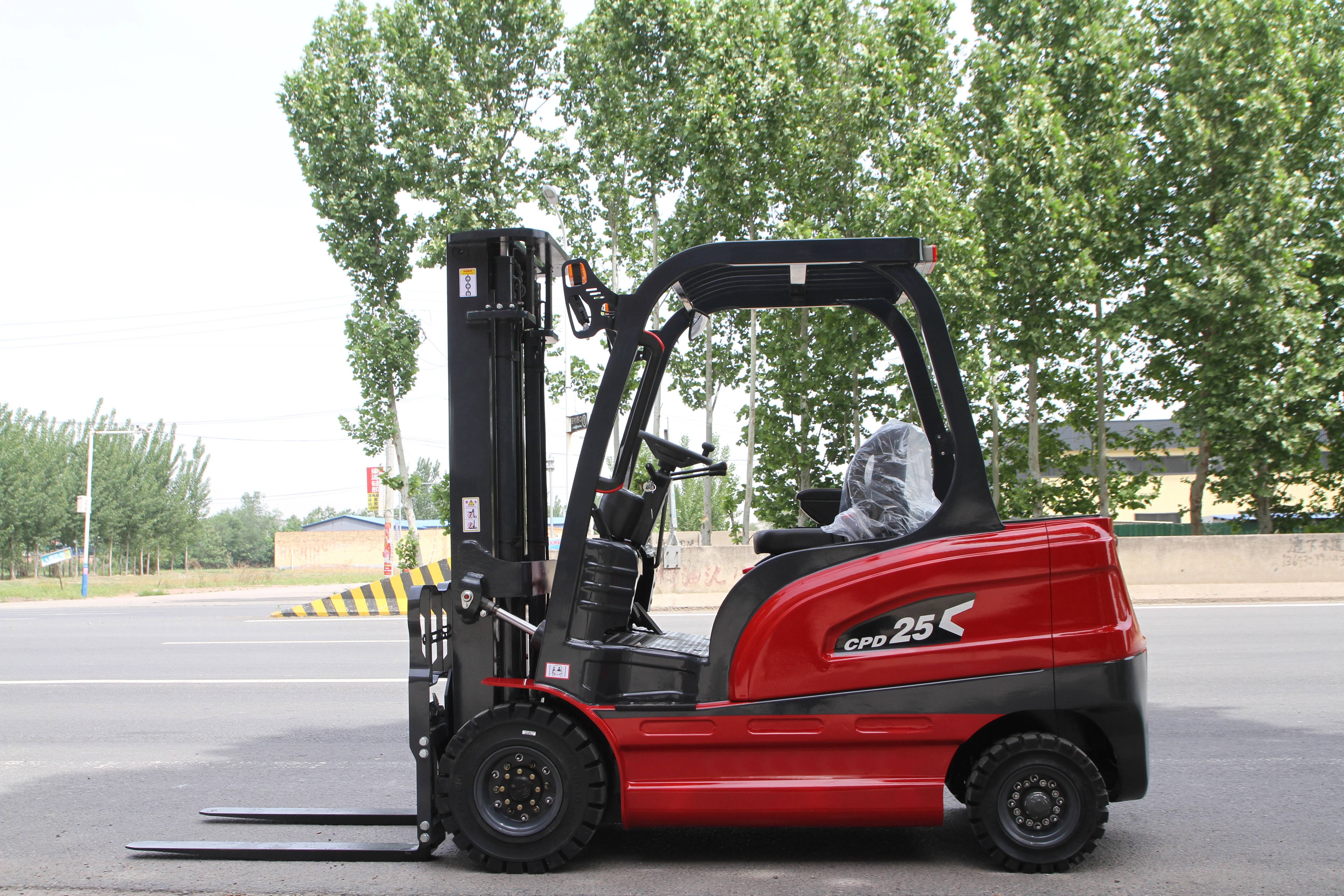
2.5 Ton Electric Forklift Buying Guide: Capacity, Battery and Applications
Pubblicato il 10 16, 2026


Ufficio 314, edificio 3, n. 12 di Haitai Development 2nd Road, zona ad alta tecnologia di Binhai, distretto di Xiqing, Tianjin, Cina.


Copyright © Tianjin HRX Technology Co., Ltd. Tutti i diritti riservati.. Mappa del sito
Casa ProdottiChi siamoPer i distributoriOEM/ODMNotizieContatti